Over the past few weeks, there has been a lot of discussion about LinkedIn’s new AI-slop classifier and the way the platform is increasingly evaluating content automatically.
It sounds like we’re suddenly playing in a completely new game.
But my view is actually still exactly the same:
Create content that people find interesting, valuable or enjoyable.
The only difference is that today you need to understand a little better what LinkedIn’s systems react to automatically.
I was recently speaking with a manager from the Dutch Tax Administration.
He had posted about leaving his role there and received around 30 views.
That seemed strange, because a personal update like that would normally perform quite well within his network.
When we looked at the photo, we noticed something small.
On a booklet in the image, there was a drawing of a partially unclothed man.
Most people would probably never look at that photo and think:
This is inappropriate content.
LinkedIn apparently did.
And that’s exactly what makes these developments interesting.
The platform no longer only looks at how people respond to your content.
It increasingly tries to determine in advance what type of content it is.
You see this with other things as well.
Lead generation.
Strong calls to action.
AI-written text.
AI-generated images and videos.
And certain words, visuals or topics can cause your reach to be limited much faster.
So you need to understand that.
And learn how to work with it.
But after that?
It’s still just marketing.
Write something people want to read.
Tell a story.
Share something people can laugh about, learn from or recognize themselves in.
Create content people genuinely want to engage with, instead of content made purely to satisfy an algorithm.
The classifier may increasingly decide whether you get through the first gate.
But in the end, your network still decides whether your content is good enough to go further.
And honestly, that’s LinkedIn too.
Because marketing has always worked like this:
It’s not only about what you say.
It’s about how you say it.
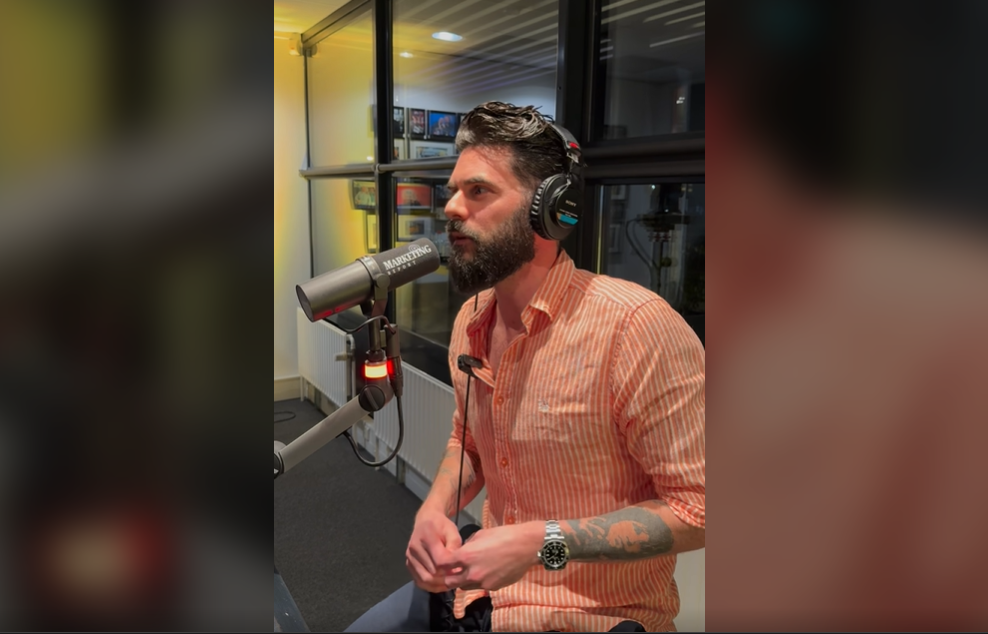
Thanks to Marketing Report International and New Business Radio for the enjoyable radio conversation and for discussing these developments.
It’s always interesting to look at these changes not just through the lens of algorithms, but through marketing, content and human behavior.