People don’t respond to words. They respond to meaning.
This is a powerful story that illustrates this perfectly.
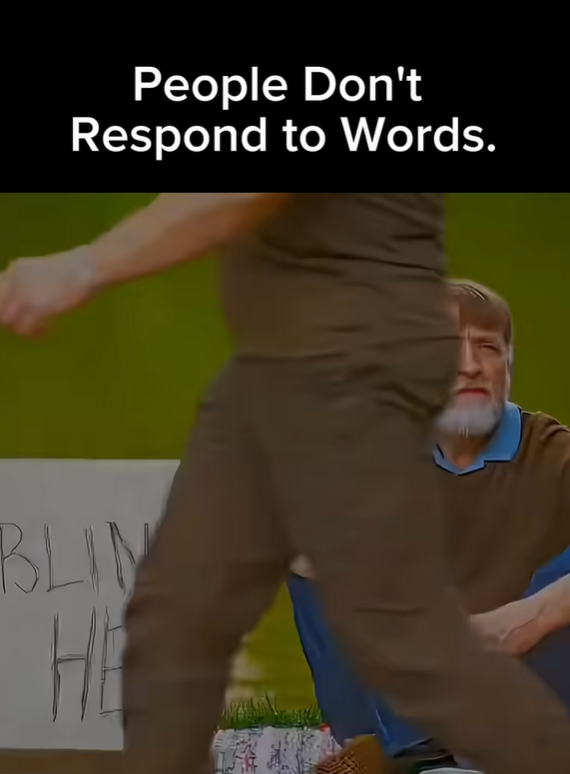
A blind man was sitting on a busy street with a sign beside him. The sign simply said: “I am blind. Please help.”
People passed by all day. Some glanced at him. A few dropped a coin into his cup. Most just kept walking.
Then a young woman stopped.
She looked at the sign, picked it up, and rewrote the message. Without saying much, she put it back down and continued on her way.
A little while later, something remarkable happened.
People started stopping.
More and more people began putting money into the cup.
The blind man couldn’t understand what had changed. When the woman returned later that day, he asked her what she had written.
She replied: “It’s a beautiful day and I can’t see it.”
The man’s situation hadn’t changed.
The weather hadn’t changed.
The people walking past hadn’t changed.
Only the message had.
The first sign informed people of a fact.
The second helped people feel something.
It allowed them to imagine his reality for just a moment. It created understanding. It created empathy.
And that’s what moved them to act.
The more I think about it, the more I realize how true this is in almost every part of life.
In marketing, we often focus on features when we should be communicating value.
In sales, we explain what we do when we should be helping people understand why it matters.
In relationships, we sometimes argue over words while completely missing the feelings behind them.
And there is a lesson here for anyone creating content online.
When you write a post, tell a story, share an experience, or try to convince people of an idea, don’t just tell them what happened.
Help them feel why it matters.
Facts inform. Meaning connects.
People rarely remember information, but they remember how something made them feel.
Things they can recognize in themselves.
That’s why communication is such an important skill. Not because it’s about finding clever words, but because it’s about helping others understand something they might otherwise never feel.
It’s a beautiful reminder that sometimes the smallest change in how we communicate can completely change the outcome.
And perhaps it’s also a reminder to be patient with people.
Not everyone has the right words to express what they need.
Sometimes they just need someone willing to understand what they really mean.
Watch the video here.